
Let's Hear it for the Boys
Centering MMCs of Color in Interracial Romance

Romance has long been a respite for readers who believe in the power of finding love. It’s a genre built on the promise that connection is not only possible, it’s inevitable. Beyond the conventions of grand gestures and familiar tropes, romance also reflects the quiet, complicated work of being truly seen and accepted. Dare I say, loved deeply and unconditionally. It’s in the pages or chapters of yearning and hope that even when the circumstances are grim, the hope of a happily ever after reminds us that love is real, messy, and simultaneously enduring. Romance is a reminder that love and being loved are worth believing in.
I wanted to dig deeper into a question that’s been quietly echoing in the back of my mind: If I believe strongly in romance (the genre) to tackle ways in which we can imagine falling in love, does that love occur for men of color? To explore this question, I invited author Elysabeth Grace to join me in a candid conversation about are male main characters (MMCs) of color missing in interracial romance (IR). Together, in this week’s Author Roundup, we unpack the nuances of IR, challenge assumptions, and imagine a future where romance fully embraces emotionally available and present men of color who love hard and are swoon-worthy book boyfriends. Can we have a space that truly reflects the full spectrum of human connection?
Before we get started, I would like to give some backstory to contextualize where the idea for the idea of the blog post came from. I am a romance reader and have been since the early 2000s (yes, I’m aging myself). One of the things that is very true about my entry into the reading romance was traditionally published by white authors. As I continued reading and devouring romance novels, I slowly started to read more IR, and to be very transparent, it was IR with a white male LI. It wasn’t until I would say 2017, when there was a bit of a light bulb moment: Wait, there has to be more. Call it naive or a lapse in judgment, either way, I had an opportunity to make a shift, and this is where indie romance came in to save the day.
Side note, I fell into the loop of “I’ll read anything where a Black FMC is being loved” and parroted that sentiment for a bit. Until I realized that my reading still leaned very white love love-interest-centered. It took a lot of intentional decisions to search for and read books where the fiction reflected my imagination of love. I was able to shift again, and honestly, I had so many more options, particularly from Black authors/authors of color AND specifically Black romance. I felt fed and deprioritized IR.
Until a lively conversation on Twitter (oh, I miss those days) reminded me that IR/MR can and should include men of color. IR, in particular, should mean that the characters are of different backgrounds and should not be synonymous with a white love interest. So here we are, years later, and I’m still thinking about IR, but more specifically, IR where men of color are front and center.

WR: Thank you, Elysabeth Grace1, for joining me for this blog post. I know you have a lot of thoughts, so let’s start off with this question. Do you think men of color are underrepresented as romantic leads in interracial romance stories? Why or why not? Follow up: If yes, what impact do you think this underrepresentation has on readers, especially readers of color?
EG: Yes, I absolutely think men of color, and especially Black men, are underrepresented. As a reader of interracial genres and subgenres, it is disheartening that the complexities, strength, and range of MMCs aren’t showcased. I suspect this absence is one reason many readers of color turn away from IR. With non-readers of color, I suspect the thought rarely crosses their minds as to what having an MMC of color might mean for their expectations/perceptions of interracial romances.
The irony is that we see IR relationships between men of color and non-women of color or cross-cultural relationships in our everyday lives, yet the representation rarely seems to make it into interracial romance novels. Somehow, the status quo opt for Black women/White men (regardless of the white man’s ethnicity), which has its own problematic valences. Reading these novels, one walks away with the idea that the only men capable of truly loving Black women are white men. Even more troubling is the underlying presumption that men of color are incapable of loving women, regardless of color, in the same in-depth ways.
WR: In full transparency, what you’re describing is my reading origin story, and I wonder if it’s the case for many readers. As we are talking through this topic, I want to be careful that we aren’t calling out anyone’s reading preferences but establishing an opportunity to fully embody and imagine men of color as viable LIs in romance. Which leads me to my next question…How do you approach writing men of color with nuance, depth, and authenticity in your work?
EG: I have to say it’s no more difficult than writing any of my characters. I draw upon my communities from childhood to adulthood. When writing non-Black men, I reach out to other writers from the culture I’m writing about, or imagine some of the men of color I know professionally or personally. The fact that my world has always been diverse and I’m willing to reach out to readers to check my representations is my bottom line. Also, because it’s fiction, I’m aware I have leeway, so I start with depth and nuance. For example, the Black MMC in my current WIP, Her Heart Only, is a listener–something very important to me to witness in men.
WR: I think it’s really important to get representation right. I wonder if that’s a barrier to writing men of color. So let me ask you this, since you mention reaching out to others…do you think when men of color are featured, how are they typically portrayed? Do you think stereotypes or perhaps fetishization might occur?
EG: Often, the portrayal (usually by white authors) is one steeped in a troubled childhood/background and a MMC who is two-dimensional and ornamental to the love interest. Without question, MMCs of color are often fetishized for their sexuality (Black), passivity (Asian), and machismo (Latino) as represented in film and on television. Again, it becomes obvious [that] when a writer knows nothing about men of color and tries to write them as main characters, it manifests in stereotypes or fetishes.
This manifestation serves to reinforce expectations about what is “believable” and thus “relatable” in romance. The other problem is “sensitivity readings” and the degree to which an IR author is willing to accept serious critiques of their representation of men of color. It seems, because it’s romance, very few readers check the author’s depiction of men of color as sexual objects rather than fully nuanced human beings. There’s very little emotional range or depth in the characterization.
WR: Hard agree. I think this might be where a fantasy of a man of color can get cringe real quick. And I think there’s room to be mindful of how your reading preferences can be headed down to fetishizing someone outside of your community. I try to do gut checks along the way. How you’ve described it is a good litmus test, and I think for other readers who are trying to be intentional, the question becomes: have you stripped this (fictional) character of their humanity and reduced them just to your fantasy? So, how do you approach writing men of color as a romantic lead?
EG: Usually, he falls first. In my contemporary Black romance series, Midsummer Sisters, every one of my MMC falls first. While there is physical attraction, what is more important to me is the awareness on his part that she is the love interest he’s been waiting for.
In my IR romance, Daughters of Saria, the MMC are men of color (mothers are African-born, fathers are white English) but initially know nothing of their Black lineage. However, their characterization is handled exactly as I would any of my Black MMC: all of them are protective, passionate, respectful, and willing to die for the FMC (who are always Black women because I write matrilineally).
What is important to me is to show how human my MMCs are. They have flaws, weaknesses, and strengths. These are men who aren’t afraid to love. When they do fall, they not only fall hard but completely.
Their physical appearances are less important to me as aspects of their character than their internal beauty. I try to write beautifully-souled (if fraught) men in gorgeous bodies. Elizabethan Mischief is the one book that has an interracial romance set within the novel. The FMCs’ mother was Black English and their father was white English (nobility). The father rejected his family and his class status for his Black wife, and died because of it.
WR: I like how you framed the characteristics you focus on. Which I think can be true for men in romance in general. How do publishing trends or reader expectations influence which interracial pairings get visibility?
EG: In my opinion, publishers do more than influence which IR pairings get visibility. Publishing determines what IR pairing is normalized (again, Black women and white men).
WR: Ok, so let me ask it a different way. How can authors and publishers work together to create more space for diverse male leads in romance?
EG: Honestly, I don’t think it’s desired on the part of publishers for two reasons: first, an unrealistic belief about profitability; and second, the ideology of what constitutes “masculinity”. White males are the dominant template for romance representation and have been since the 17th century.
WR: This is getting juicy lol… Do you think there’s a difference in how men of color are portrayed in indie vs. traditionally published romance?
EG: Absolutely, even if there is a lack of representation.
WR: And here’s the thing, I think readers play an essential role in promoting these books, and where I think Black romance absolutely shows that Black men are top-tier LIs. We need publishing to catch up. But if they don’t, here’s again, where indie is showing and standing 10 toes down. What would you like to see more of in the future of interracial romance, and what role can readers play to support diverse pairings?
EG: I honestly believe, given the current state of publishing (financially and otherwise), authors who write IR outside the normative template face somewhat of an uphill battle because readers make clear (especially those visible on social media) what their expectations are. To shift the terrain so that diverse pairings become expected, readers will have to have to be willing to shake up their reading habits.
Read widely in different romance genres. Diverse IR romance pairings are taking place in historical, suspense, paranormal, and some dark romances. If a reader only reads contemporary, then they may miss out on some wonderful/amazing depictions of interracial romance.
WR: This has been so much fun talking through this topic with you. I like to end all of my blog posts with recommendations. What are some examples of books or authors who are doing this well, and what can we learn from them?
EG: I believe Katrina Jackson’s “Office Hours” and “Sabbatical” and Tasha L. Harrison’s “She Said Yes…” offer some great examples of strong representations of how to write interracial romance without white men and women.
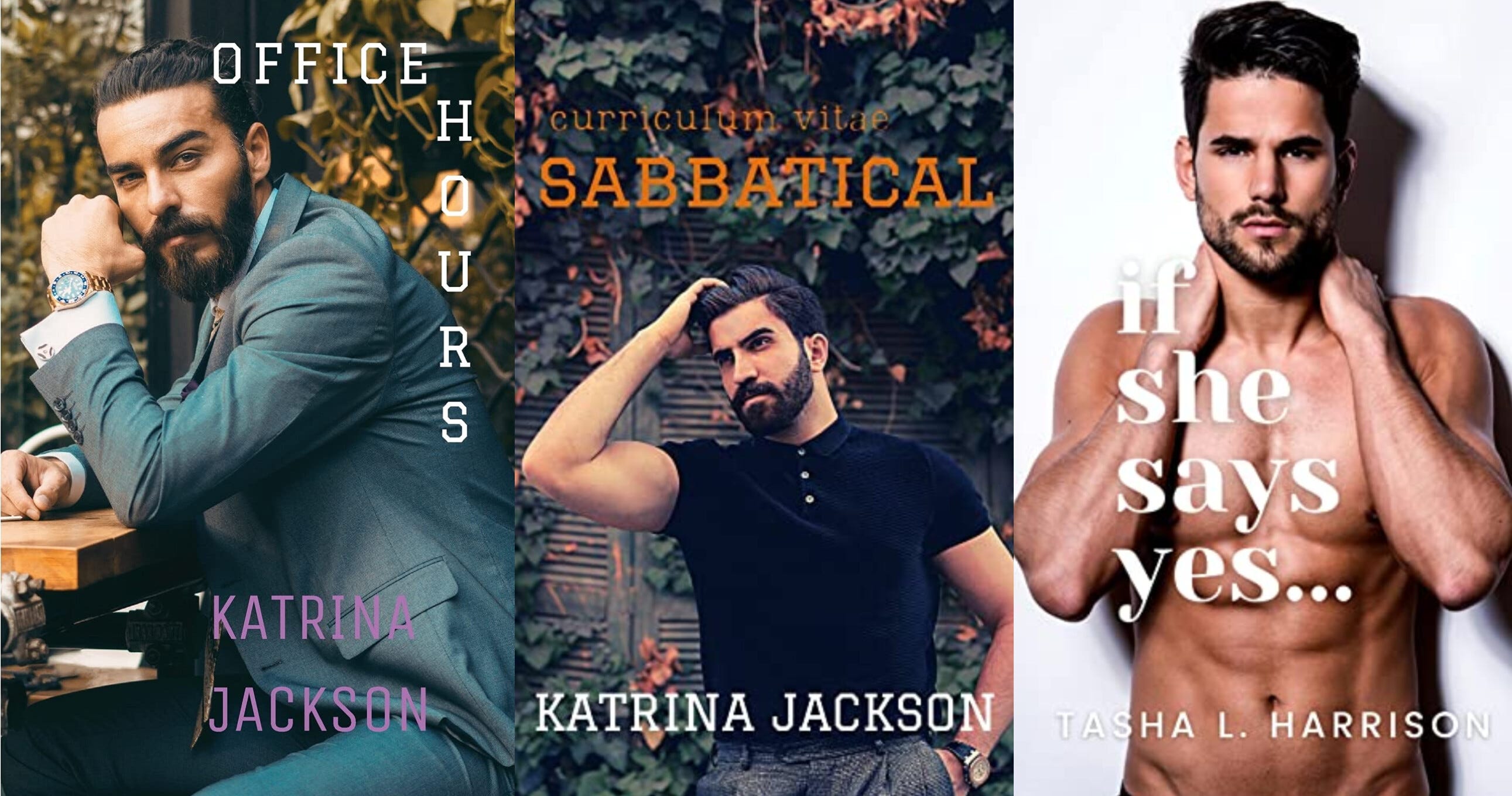
WR: These 3 are my all-time favorite romances, and I often recommend these to readers who are interested in getting into romance.
Thank you, Elysabeth Grace, for joining me in this interview. As always, having the opportunity to collaborate on a topic that has been rolling around in my head so much more life and justice than I can do on my own.
Check out the books Elysabeth Grace mentioned from her catalog!

Happy Reading!

Elysabeth Grace is the author of historical, paranormal, and contemporary romances and irreverent cozy mysteries. She spends her days amused by the antics of MoMo, aka Thug Boi, and Pomegranate, cats extraordinaire. As an Aquarius chaos walking, Elysabeth loves writing about excluded Black histories, women with daggers, and the people who love them. In an alternative persona, she is a Shakespearean. While she enjoys writing the complexity of happily ever afters, she admits to writing characters who are dangerous when it comes to those they love, although she’s not shy about sprinkling sweetness where she can.
https://www.elysabethgrace.com/
This was a great convo and so many points made me wanna shout out cuz exactly that!